
Who Should Be Included in Sales Training?
Five Questions Every L&D and Sales Leader Should Ask
When organizations invest in sales training, one of the first questions is often, “Who should attend?”
The answer may seem obvious: the sales team.
Many sales training initiatives focus too narrowly on job titles instead of business impact. Customers interact with multiple people throughout their journey—from marketing and business development professionals to account managers, customer success teams, technical experts, and operational leaders. Each interaction ultimately influences revenue.
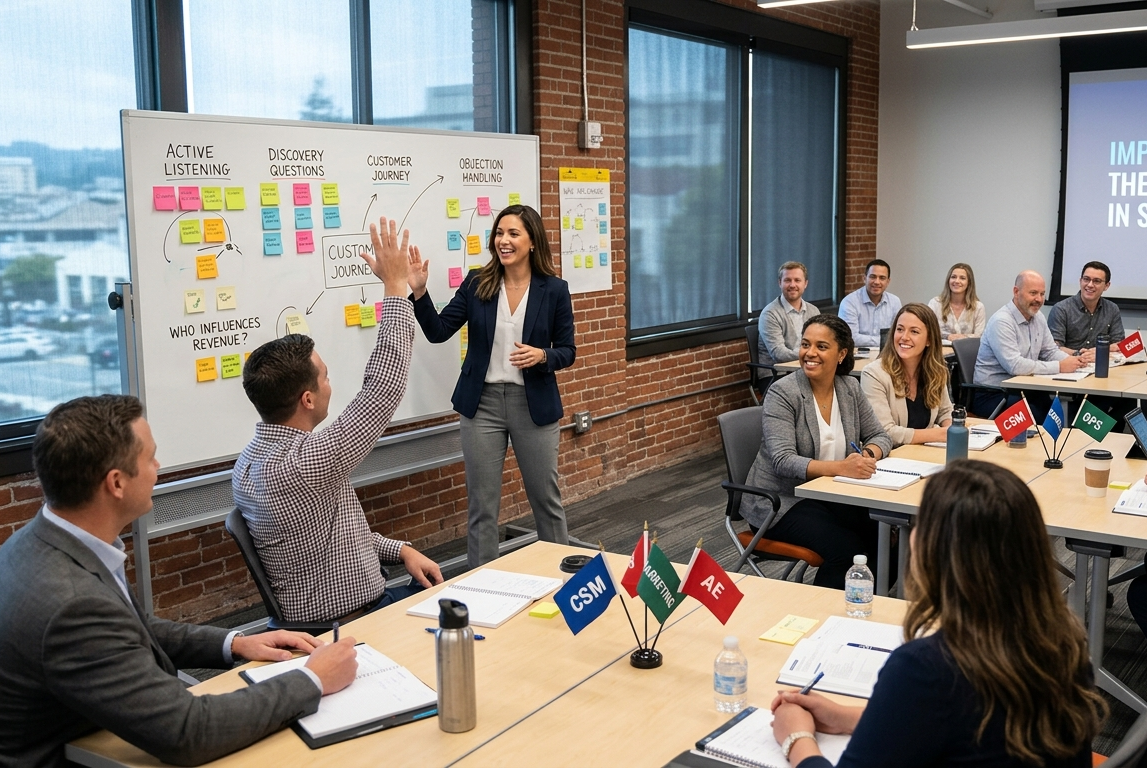
For Learning & Development leaders and Sales leaders, the challenge is determining where training investments will have the greatest impact. Before selecting participants, consider these five questions.
1. Where in the Customer Journey Is Value Created—or Lost?
Buyers form impressions at every stage of their experience with your organization.
Consider the entire customer journey:
- Initial outreach and lead generation
- Discovery conversations
- Proposal and solution development
- Implementation and onboarding
- Ongoing account management and renewal discussions
Who interacts with customers during these moments? Who influences perceptions of expertise, responsiveness, and trust?
If customer success managers are responsible for renewals and expansion opportunities, they may benefit from sales training just as much as frontline sales representatives. If technical experts frequently participate in solution discussions, they may need stronger communication and consultative skills to support the buying process.
The goal is to identify everyone who contributes to the customer’s decision-making experience.
2. Which Roles Directly Impact Revenue?
Many organizations underestimate the number of people who influence revenue outcomes.
Revenue is often affected by:
- Account managers
- Customer success professionals
- Consultants
- Project managers
- Technical specialists
- Client service teams
- Business development representatives
These individuals may not consider themselves salespeople, yet they regularly participate in customer conversations that influence buying decisions, renewals, referrals, and account growth.
When evaluating training audiences, focus on revenue influence. Ask: Who regularly engages customers in conversations that shape business outcomes?
The answer often reveals a broader group of learners than initially expected.
3. At What Levels Do We Need Behavior Change Versus Reinforcement?
Not everyone needs the same training experience.
Individual contributors may need foundational skills such as:
- Discovery and questioning techniques
- Active listening
- Handling objections
- Presenting solutions with confidence
Managers and leaders, however, often need a different set of capabilities:
- Coaching sales conversations
- Reinforcing desired behaviors
- Leading deal reviews
- Creating accountability and consistency
One of the most common mistakes organizations make is training frontline employees while excluding the managers responsible for sustaining behavior change.
Without reinforcement, even the strongest training program can quickly fade. Effective sales training strategies recognize that different levels require different learning experiences even though all levels play a role in driving results.
4. Where Are Deals Currently Stalling?
Your sales pipeline can provide valuable clues about training needs.
Review recent opportunities and ask:
- Where do prospects disengage?
- What objections are most difficult to address?
- Where do handoffs between teams create friction?
- Which customer conversations feel the most challenging?
The answers often point directly to the groups that should be included in training.
For example, if opportunities stall during solution discussions, technical teams may need stronger customer communication skills. If renewals are declining, account management and customer success teams may need additional consultative selling capabilities.
Rather than training everyone equally, focus first on the teams closest to the most significant business challenges.
5. Who Must Model and Reinforce the Desired Behaviors?
Perhaps the most important question is this: Who will sustain the learning after the workshop ends?
Training alone rarely changes performance. Lasting improvement occurs when leaders consistently model and reinforce new behaviors.
When leaders participate in training, they gain a shared language and framework that allows them to coach more effectively. They also demonstrate that the organization views sales excellence as a strategic priority.
Impact
The most effective sales are built around customer impact. For L&D and Sales leaders, the question is not simply, “Who sells?” The better question is, “Who influences revenue and business growth?” When the right people are included, sales training becomes a catalyst for sustainable business growth.